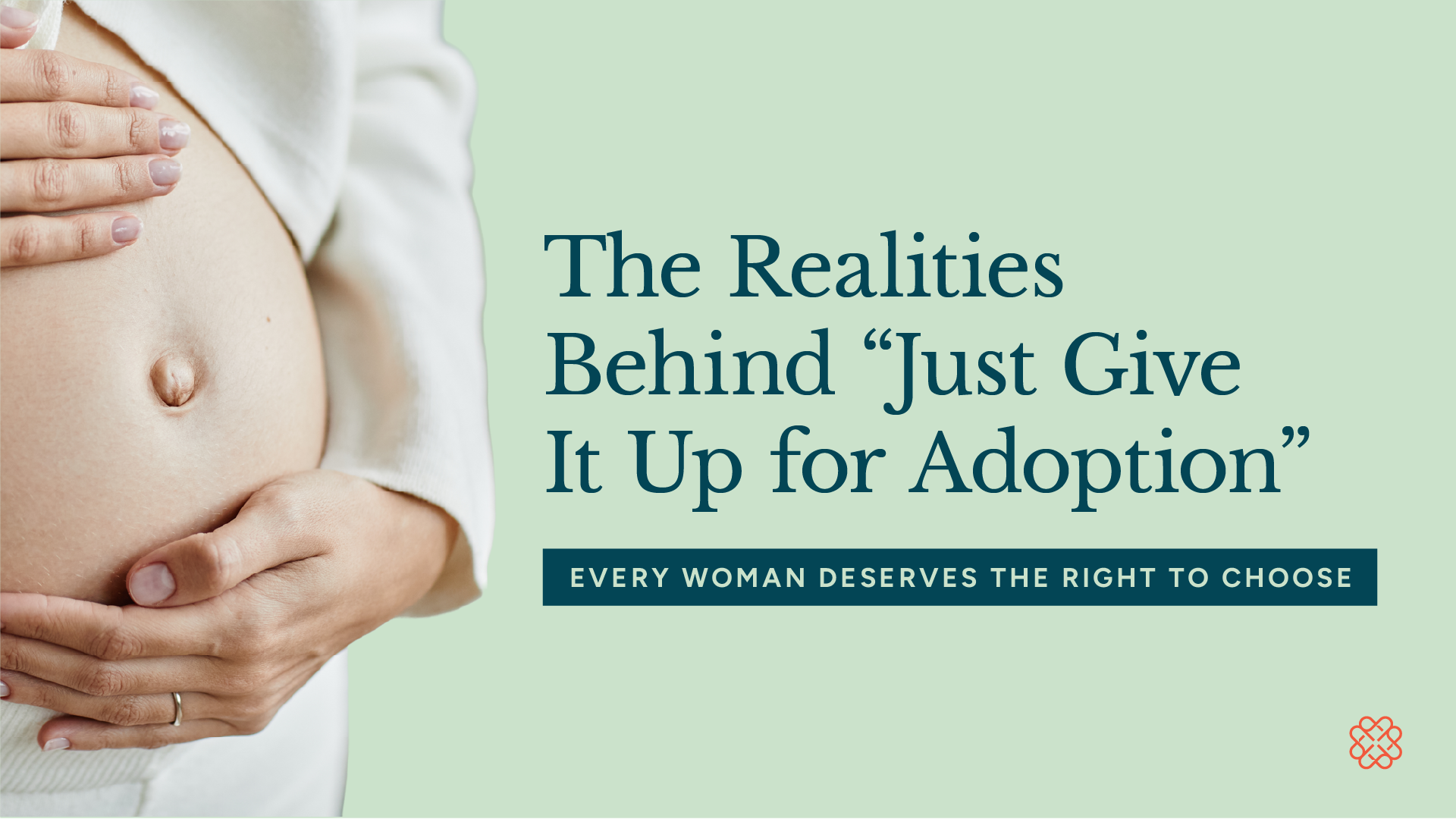

We often hear the argument: “There are so many people who want children who can’t have them, so if someone becomes pregnant and doesn’t want the baby, they should just carry it and choose adoption.”
But this response oversimplifies a deeply complex issue. Every pregnancy is different, every circumstance unique, and every person deserves the right to make their own decision. Carrying a pregnancy under duress is not a “simple solution” it’s a life-altering experience that affects a person physically, emotionally, and financially for years to come.
What’s often misunderstood is that adoption and abortion are not opposites. Both can be acts of love, courage, and loss. Both require mental health care, financial support, medical access, and the freedom to choose without coercion, shame, or judgment.
Survivor of Rape or Abuse
For a person who becomes pregnant after rape or sexual assault, pregnancy isn’t a “choice” it’s a continuation of trauma. Survivors already carry the lifelong weight of physical and psychological scars: PTSD, depression, anxiety, fear of medical settings, and social isolation are all common.
In Iowa, the law claims to allow abortion in cases of rape but only if it’s reported within 45 days. Meanwhile, the 6-week abortion ban takes effect when “fetal cardiac activity” is detected, about 4 weeks after conception or roughly 30 days from the assault. The math doesn’t work in a survivor’s favor. Even if she reports, she’s still subject to a 24-hour waiting period and state-mandated consent, and many doctors refuse care because the law is unclear and they fear prosecution.
- 1 in 4 U.S. women experience sexual violence in their lifetime.
- Less than 30% of rapes are ever reported.
- In states with abortion bans, survivors face even higher barriers to care.
A Pregnant Minor
Imagine being a teenager in high school and finding out you’re pregnant. Overnight, your future shifts: college, career goals, and independence may no longer be possible. The mental toll is immense. Shame, judgment from peers and adults, and the weight of adult decisions on a child who’s still developing emotionally herself.
Forcing a teenager to carry a pregnancy is not only unethical, it’s dangerous. Teens face higher risks of medical complications during pregnancy and childbirth. Babies born to teen mothers are more likely to be premature or have low birth weight, and the mothers are more likely to live in poverty long term.
Now imagine being her parent. Put yourself in that girl’s father’s shoes. Would you want the government deciding for your daughter whether she must continue the pregnancy? Or would you want her to have the space, medical guidance, and emotional support to make the decision that’s right for her?
Simply saying “choose adoption” ignores the trauma and stigma of being pregnant as a child, the disruption to her life and education, and the permanent emotional and physical toll of childbirth.
Whether she chooses to parent, place for adoption, or end the pregnancy, that decision is not made lightly. Every option carries lasting consequences, physical, emotional, and financial. What matters most is that she, with her family and her doctor, has the right to decide for herself.
- Teen mothers are less likely to finish high school, and only 2% earn a college degree by age 30.
- Teen pregnancies are linked to higher maternal and infant mortality rates.
Adoption: A Complex and Compassionate Path
Adoption can be an act of love for both the birth parent and the adoptive family. It can create new beginnings filled with joy and connection. But it’s not the simple “solution” often presented in political talking points.
For someone who decides to continue a pregnancy with the intent to place a child for adoption, the journey is physically and emotionally demanding. It requires prenatal care, safe delivery, mental health support, and post-partum recovery. Yet many pregnant people in Iowa lack Medicaid access or doctors who accept it. The nine-month process itself can be traumatic when it happens without consistent medical and emotional support.
- More than 113,000 children in the U.S. are waiting to be adopted from foster care.
- The average wait time for infant adoption is 1–2 years.
- Domestic private newborn adoption costs $20,000–$45,000 on average.
Adoption is an important and meaningful choice but it’s still that: a choice.
It cannot replace reproductive freedom, and it cannot justify removing a woman’s right to decide what happens to her own body.
The Bigger Picture
These aren’t abstract examples, they’re happening right now in Iowa and across the country. When access to reproductive healthcare and personal choice are restricted, lawmakers don’t create more adoptions or “happy endings.” They create more trauma, fear, and preventable suffering.
Yes, Adoption Can Be a Path. But It Shouldn’t Be the Only One.
Adoption has created countless loving families filled with joy and purpose. Those stories matter. But so do the stories of women who couldn’t access care, who were forced into pregnancy, or who never had the chance to make their own decision.
Whether someone chooses termination, adoption, or parenting, every path requires compassion, mental healthcare, and medical access. And all of these depend on one fundamental right: bodily autonomy, the ability to decide what happens to one’s own body.
Sources & Further Reading
- Post-Dobbs Pregnancy Criminal Cases – Pregnancy Justice
- How States Can Criminalize Miscarriages and Stillbirths – The Marshall Project
- Average Adoption Costs in the United States – Family Equality
- The Financial Barrier to Adoption – Show Hope
- Adoption Statistics & Rates in the U.S. – Lifelong Adoptions
- CDC – Sexual Violence Statistics
- Teen Birth Statistics – CDC Data & Statistics
- Substance Use During Pregnancy – CDC
For more reproductive rights information and updates on Iowa healthcare access, visit our resources page or sign up for our newsletter.
Empower change.
Sign up for our newsletter and stay informed on reproductive healthcare issues in Iowa.