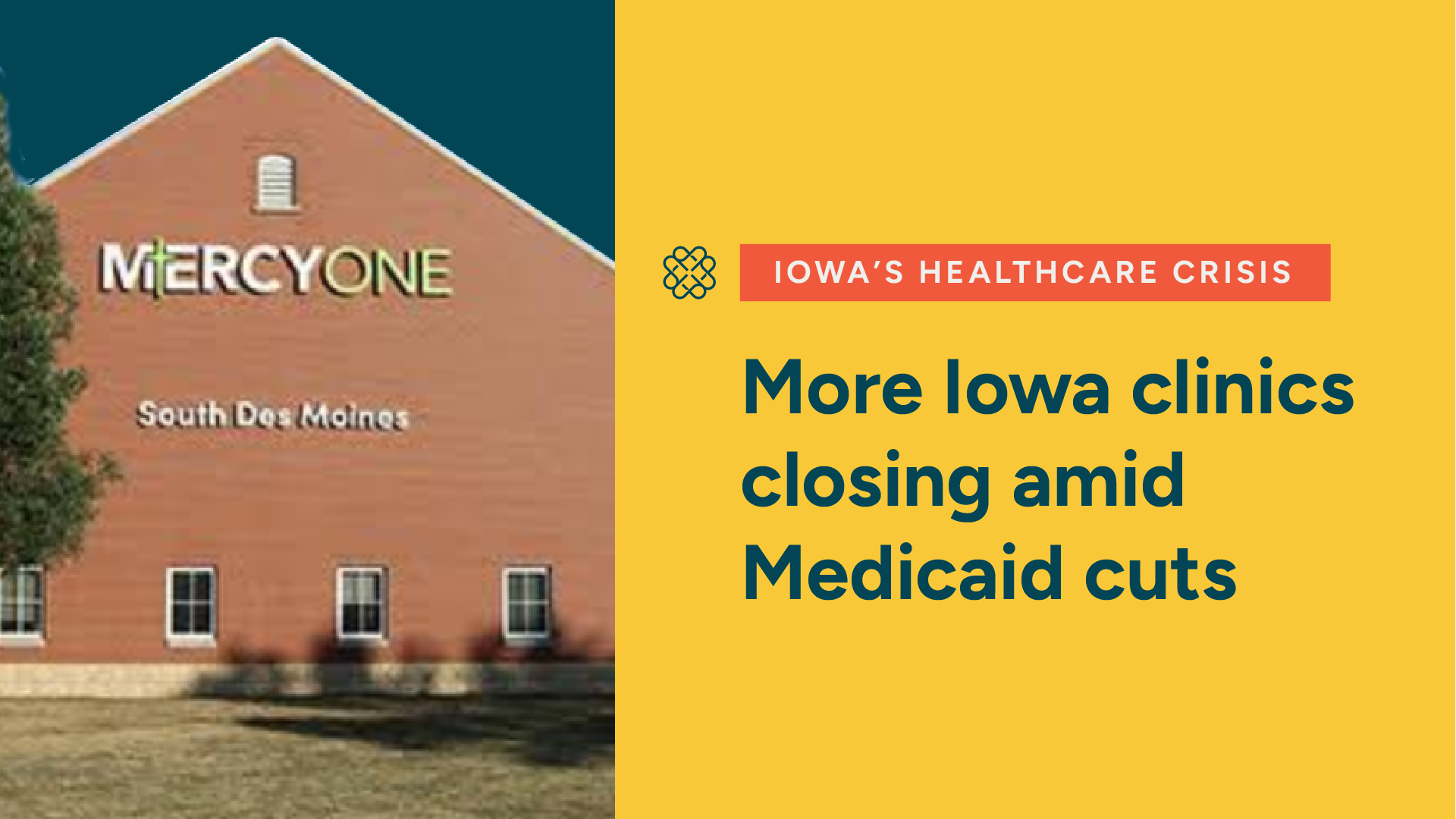

MercyOne will close its South Des Moines Family Medicine and Urgent Care clinics on June 26, citing rising operational costs, staffing pressures, and anticipated cuts to Medicaid and Medicare reimbursement as contributing factors in the decision.
The closures are the latest in a growing number of healthcare service reductions across Iowa, particularly affecting communities already facing provider shortages and limited access to care.
According to MercyOne, patients from the South Des Moines locations will be redirected to other clinics in the Des Moines metro area. However, for many residents, this means traveling farther for primary and urgent care services. The nearest MercyOne urgent care locations will now be located at least 17 minutes away in Indianola or Pleasant Hill.
In a FAQ released alongside the announcement, MercyOne specifically referenced “expected Medicaid cuts” as part of the reason for the “difficult but necessary changes.”
A Broader Trend Across Iowa
The South Des Moines closures follow several other recent healthcare reductions across the state, including:
- MercyOne’s closure of its Ottumwa family medicine clinic earlier this year
- MercyOne closing its Ottumwa family medicine clinic earlier this year
- Pella Regional Medical Clinic reducing family practice operations
- MercyOne Clinton Medical Center ending labor and delivery services in March
- Southeast Iowa Regional Medical Center in Fort Madison ending birthing and delivery services in December
- Additional clinic closures in communities including Traer
These changes come as Iowa continues to face:
- provider shortages, particularly in OB-GYN and primary care,
- growing maternity care deserts,
- and increased strain on rural hospitals and healthcare systems.
A maternity care desert is an area with limited or no access to obstetric providers, birthing hospitals, or prenatal care services. Large portions of rural Iowa already fall into this category.
Medicaid Cuts and Healthcare Access
Healthcare systems across the country have raised concerns about the impact reduced Medicaid reimbursement could have on patient access and hospital stability.
Following the signing of the federal reconciliation package earlier this year, Mike Slubowski, CEO of Trinity Health—MercyOne’s parent company—stated that projected Medicaid reductions could more than double the organization’s annual losses to over $1 billion.
Healthcare leaders in Iowa have also warned that reduced Medicaid funding can create ripple effects throughout communities.
Todd Patterson, CEO of Washington County Hospital and Clinics, previously wrote that when healthcare coverage is reduced or access narrows:
“Patients delay care until it becomes an emergency. Chronic diseases go unmanaged. Mental health crises deepen. Preventable conditions become fatal.”
Why This Matters for Iowa Communities
For many Iowans, especially those in rural communities or underserved areas, local clinics are often the first point of access for:
- preventative care,
- chronic disease management,
- urgent care,
- prenatal care,
- and mental health referrals.
When clinics close or services are reduced, patients may face:
- longer travel times,
- delayed appointments,
- overcrowded emergency rooms,
- and increased barriers to ongoing care.
Research has consistently shown that reduced access to primary care is associated with worse long-term health outcomes and increased healthcare costs overall.
According to the March of Dimes, more than one-third of Iowa counties are already considered maternity care deserts or have limited maternity care access.
Understanding the Policy Connection
Healthcare systems operate within a complex combination of:
- workforce availability,
- reimbursement structures,
- federal and state policy decisions,
- and patient population needs.
Changes to Medicaid funding and reimbursement can directly affect whether hospitals and clinics are financially able to continue operating certain services, especially in communities where margins are already thin.
As healthcare access continues to evolve across Iowa, these closures are part of a broader conversation about workforce shortages, rural healthcare infrastructure, affordability, and how policy decisions impact local care availability.
Sources & Further Reading
For more reproductive rights information and updates on Iowa healthcare access, visit our resources page or sign up for our newsletter.
Empower change.
Sign up for our newsletter and stay informed on reproductive healthcare issues in Iowa.