
Since Iowa's six-week abortion ban took effect in July 2024, official state statistics have shown a decline in the number of abortions performed within Iowa.
At first glance, those numbers may suggest that fewer Iowans are seeking abortion care. But a growing body of data tells a more complete story. Rather than stopping care altogether, many Iowans are traveling to other states to receive the healthcare they can no longer access at home.
Iowa Numbers Don't Tell the Whole Story
State reports only capture abortions performed within Iowa.
They do not include:
- Iowans who travel to another state for care.
- Medication abortions obtained through providers in other states.
- Care received through shield law states or other legal pathways outside Iowa.
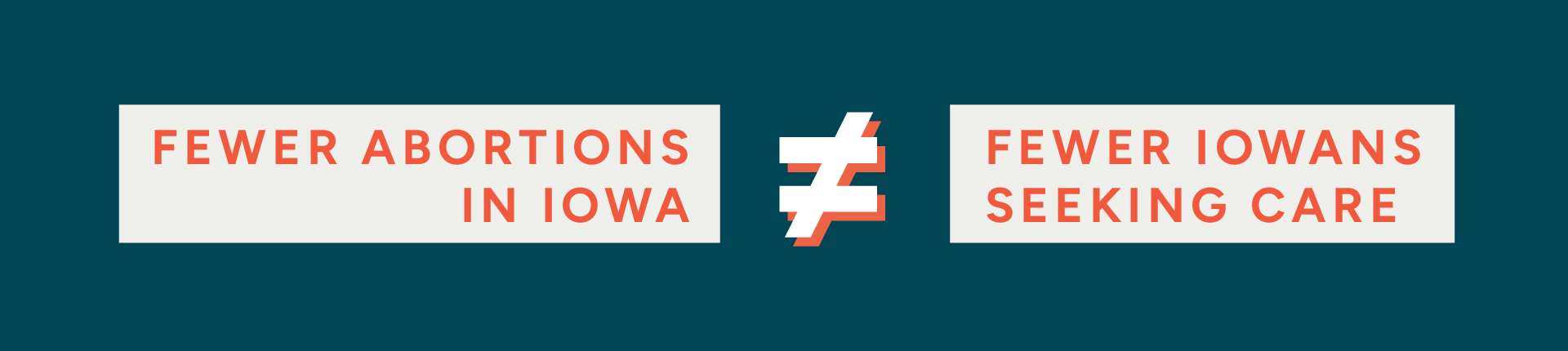
As a result, fewer abortions being reported in Iowa does not necessarily mean fewer Iowans are having abortions. It may instead reflect where that care is taking place.
More Iowans Are Traveling for Care
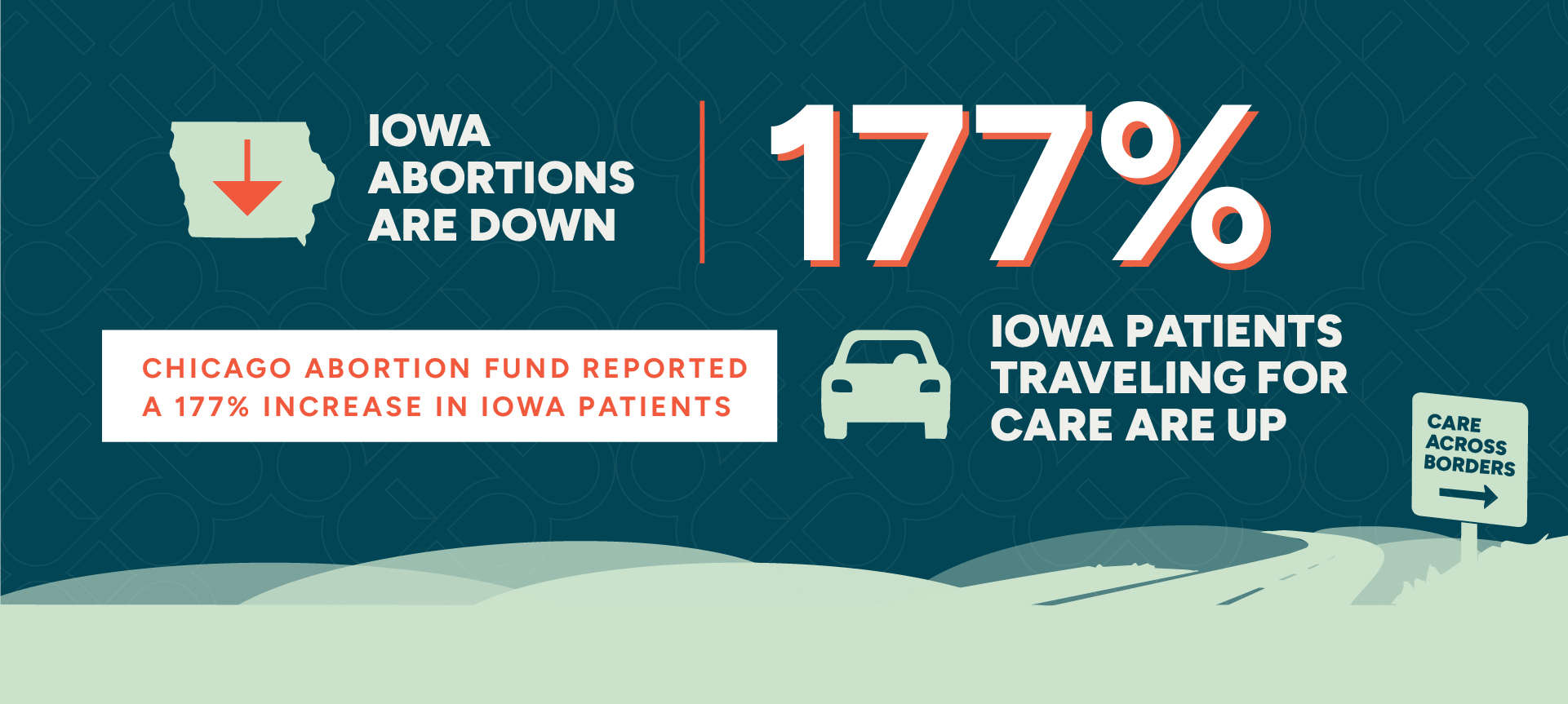
New data released by the Chicago Abortion Fund provides a clearer picture of how healthcare access has changed since Iowa's six-week ban took effect.
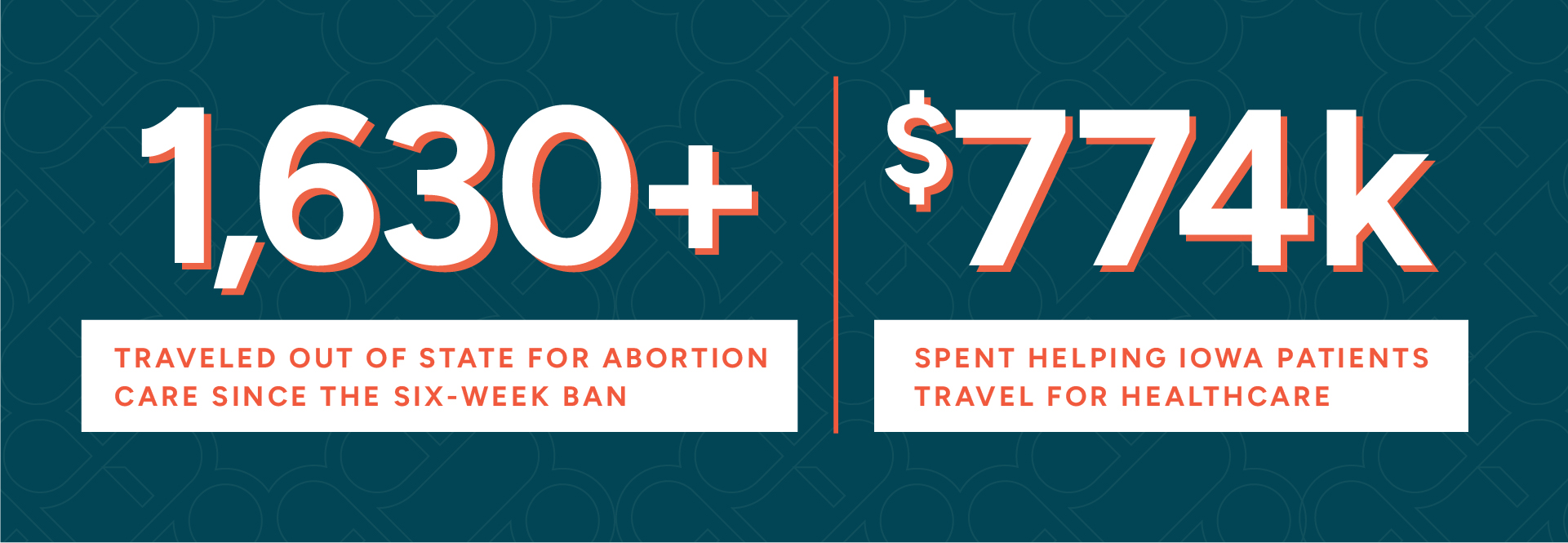
Since July 2024, the organization reports it has helped:
1,630+
Iowans travel for abortion care
177%
Increase in Iowa patients seeking travel assistance
$774,000
Spent helping Iowa patients travel for care
These numbers represent people who had to leave Iowa in order to access healthcare.
The data does not include Iowans who traveled without financial assistance, paid for travel themselves, or obtained care through other providers.
The true number of Iowans traveling for abortion care is likely higher.
What Has Changed?
Under Iowa's current law, most abortions are prohibited after cardiac activity can be detected, typically around six weeks of pregnancy.
In July 2026, HF 2788 added additional restrictions affecting medication abortion and telehealth care provided by Iowa healthcare providers.
Together, these laws have significantly changed how and where Iowans access reproductive healthcare.
Many patients now face:
- Longer travel distances
- Additional transportation costs
- Time away from work
- Childcare expenses
- Multiple medical appointments
- Delays in receiving care
For some, leaving the state has become the only option.
The Economic Cost of Traveling for Care
Traveling out of state isn't simply inconvenient.
It can mean paying for:
- Gas or airfare
- Hotels
- Childcare
- Lost wages
- Time away from work
- Additional medical expenses
For many families, these costs create barriers that go far beyond the medical procedure itself.
Research has shown that people denied timely healthcare are more likely to experience financial hardship, delayed care, and poorer health outcomes.
Looking Beyond the Numbers
Official Iowa reports accurately describe what is happening inside Iowa's healthcare system.
But they cannot answer a different question:
Where are Iowans going when they can't receive care here?
Travel data helps fill in part of that picture. It suggests that declining abortion numbers in Iowa may reflect changing access, not necessarily changing demand.
Understanding both sets of data provides a more complete view of how reproductive healthcare has changed across the state.
The Bottom Line
Healthcare data tells the clearest story when viewed in context.
Since Iowa's six-week abortion ban took effect, fewer abortions are being performed within Iowa. At the same time, organizations helping patients travel for care report significant increases in the number of Iowans leaving the state to receive healthcare.
Taken together, these trends suggest that access to abortion has changed far more than the need for it.
Sources
- Chicago Abortion Fund – Two-Year Anniversary of Iowa Abortion Ban Marked by Soaring Travel Numbers and Costs
- Iowa Department of Health and Human Services – Induced Termination of Pregnancy Reports
- Iowa Coalition for Reproductive Freedom
For more reproductive rights information and updates on Iowa healthcare access, visit our resources page or sign up for our newsletter.
Empower change.
Sign up for our newsletter and stay informed on reproductive healthcare issues in Iowa.